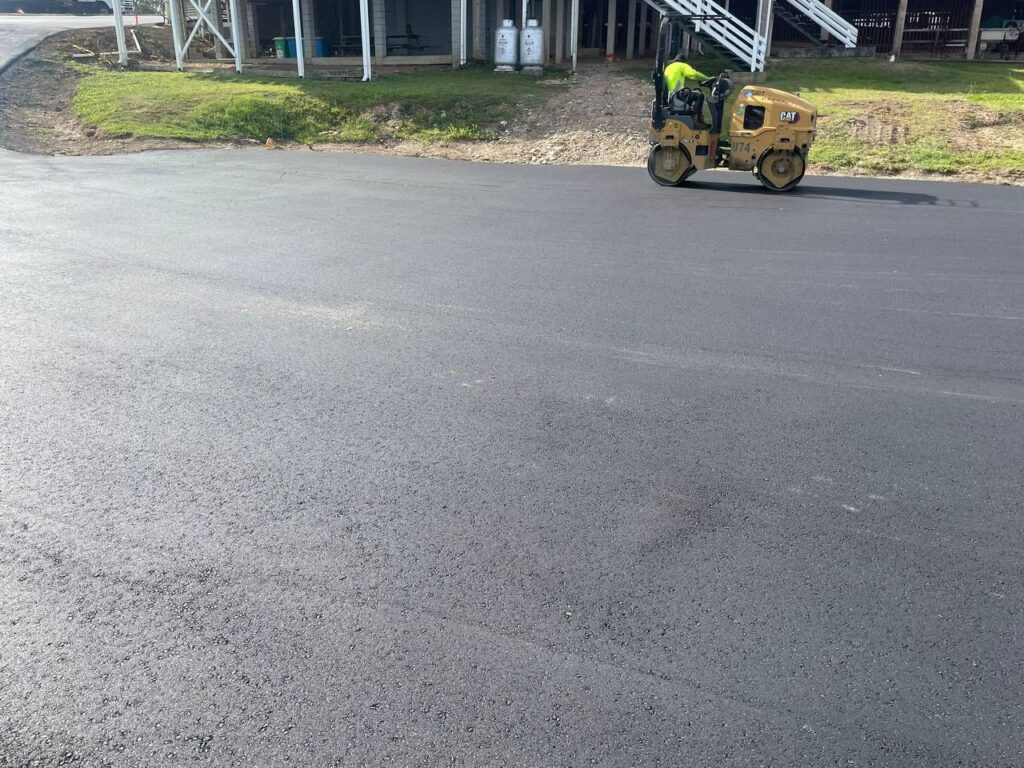
Hardstands are designed to provide stable, practical surfaces for vehicle movements, parking, equipment storage and other activities that place regular demands on the pavement. Over time, however, even a well-constructed hardstand can begin showing signs of deterioration. Cracking, surface wear, potholes and uneven sections can affect its usability and indicate that maintenance or more extensive repairs are required.
When these problems develop, resurfacing may provide an effective way to restore the hardstand without completely rebuilding it. The suitability of resurfacing depends on the condition of the existing pavement, particularly whether its supporting layers remain structurally sound.
For property owners and businesses in Cabarita Beach, NSW, understanding when hardstand resurfacing is appropriate can help ensure that deteriorating surfaces receive the right treatment before damage becomes more extensive.
What Is Hardstand Resurfacing?
Hardstand resurfacing involves renewing the upper pavement layer of an existing hardstand to improve its condition, appearance and functionality.
Depending on the existing construction and intended use, resurfacing may involve installing a new asphalt layer or applying a suitable bituminous surface treatment.
The purpose is to restore a serviceable wearing surface while retaining the underlying pavement structure where it remains suitable.
Before resurfacing, the existing hardstand should be assessed for cracking, deformation, drainage problems and signs of structural weakness.
Any defects that could affect the new surface need to be addressed during preparation.
Resurfacing is most appropriate when deterioration is concentrated in the upper pavement layers rather than throughout the entire structure.
1. When the Surface Is Worn but the Base Remains Stable
One of the clearest situations where hardstand resurfacing may be suitable is when the existing surface has deteriorated but the supporting pavement remains stable.
Asphalt and bitumen surfaces naturally experience wear from traffic, weather exposure and regular use. Over time, the wearing layer may become rough, lose aggregate or develop minor defects.
If the underlying pavement continues to provide adequate support, renewing the surface may be sufficient to restore its functionality.
A professional assessment can help determine whether the existing base is suitable for resurfacing or whether localised strengthening is required first.
The important distinction is between surface deterioration and structural failure.
2. When Minor Cracking Has Started to Develop
Cracks are common signs of pavement ageing, but their severity and pattern can reveal different conditions.
Isolated cracks may develop as the surface ages or experiences movement. If they remain relatively limited and the surrounding pavement is stable, appropriate repairs followed by resurfacing may be a suitable option.
However, widespread interconnected cracking can indicate that deterioration extends deeper into the pavement.
Resurfacing over unstable or extensively cracked sections without suitable preparation may allow cracks to reappear through the new layer.
This process, known as reflective cracking, can occur when movement within the existing pavement transfers stress into the newly installed asphalt.
Professional assessment helps establish whether the cracking can be managed through repairs and resurfacing or whether more extensive pavement work is necessary.
3. When Localised Potholes Can Be Properly Repaired
A hardstand does not automatically require complete reconstruction because several potholes have developed.
Where the surrounding pavement remains structurally sound, localised potholes may be repaired before resurfacing.
Effective pothole repairs can involve removing loose or failed material, correcting any underlying weakness and reinstating the damaged section with appropriate compaction.
Once the affected areas are stable, resurfacing may provide a consistent new wearing layer across the hardstand.
However, potholes that repeatedly return in the same locations deserve closer investigation.
Recurring failures may indicate weakened base material, moisture penetration or pavement construction that is unsuitable for the loads being applied.
These problems should be corrected before a new surface is installed.
4. When the Hardstand Has Become Rough or Uneven
A hardstand may gradually lose its smoothness as a result of surface wear, localised deformation or previous repairs.
An uneven surface can make vehicle movements less comfortable and may interfere with the practical use of the area.
Where the irregularities are relatively shallow and the underlying pavement remains stable, suitable preparation and asphalt resurfacing may restore a more consistent finish.
However, deep depressions, extensive rutting or significant settlement may indicate structural deterioration.
Simply placing new asphalt over these defects may not prevent them from returning.
The cause of the unevenness should therefore be established before resurfacing is recommended.
5. When Surface Drainage Needs Improvement
Drainage is an important consideration for any hardstand because rainfall needs to move away from the trafficable surface effectively.
Over time, minor depressions and uneven areas can develop, allowing water to collect in particular locations.
Standing water may increase the opportunity for moisture to enter the pavement through cracks, joints and damaged sections.
Where the existing pavement remains stable, resurfacing may provide an opportunity to correct minor surface irregularities and establish more effective drainage falls.
However, resurfacing cannot always resolve significant drainage problems on its own.
If surrounding levels, drainage outlets or the supporting pavement are contributing to water accumulation, additional preparation may be required.
For hardstands in Cabarita Beach, NSW, drainage should be considered as part of the overall resurfacing assessment rather than treated as an afterthought.
6. When the Existing Hardstand Still Meets Its Traffic Requirements
Resurfacing can be appropriate when the hardstand continues to accommodate the type and frequency of traffic for which it was constructed.
A pavement that remains structurally suitable for its current use may only require renewal of its wearing surface.
However, if the hardstand now supports heavier vehicles, more frequent movements or additional equipment, its original construction may no longer be adequate.
Increased loading can place additional stress on the pavement, particularly in areas where vehicles turn, brake or remain stationary.
Before resurfacing, an experienced contractor should consider whether the existing pavement structure remains suitable for its intended use.
If the hardstand requires greater structural capacity, strengthening or reconstruction may be more appropriate than resurfacing alone.
What Are the Benefits of Hardstand Resurfacing?
When the existing pavement is suitable, resurfacing can provide several practical improvements.
These may include:
- Restoring a smoother and more consistent surface
- Renewing an ageing asphalt or bitumen wearing layer
- Improving the appearance of the hardstand
- Addressing widespread surface deterioration
- Improving drainage where suitable level corrections are possible
- Reducing exposure of underlying pavement materials
- Extending the serviceability of a structurally sound hardstand
- Providing a renewed surface for regular vehicle movements
These benefits depend on the condition of the existing pavement and the quality of the preparation undertaken before resurfacing.
The objective is to preserve suitable pavement while correcting deterioration that could otherwise continue spreading.
When Is Hardstand Resurfacing Not Enough?
Although resurfacing can restore many deteriorating hardstands, it is not suitable for every situation.
Where damage extends significantly into the supporting pavement layers, installing a new surface may provide only temporary improvement.
Warning signs that more substantial work may be necessary include:
- Deep or widespread rutting
- Significant pavement settlement
- Extensive interconnected cracking
- Persistent soft or unstable areas
- Repeated pothole formation
- Major erosion or washouts
- Movement under heavy vehicle loads
- Widespread failure of previous repairs
These conditions can indicate that the existing pavement is no longer providing adequate structural support.
Where necessary, damaged sections may need to be excavated and rebuilt before a new asphalt or bitumen surface is installed.
The extent of reconstruction should reflect the actual condition of the pavement rather than assuming the entire hardstand must be replaced.
Why Is the Supporting Base So Important?
The visible asphalt or bitumen surface is only one component of a hardstand.
Beneath it are supporting pavement layers that distribute vehicle loads and help maintain stability.
If these layers become weak, saturated, poorly compacted or otherwise unsuitable, the surface above may begin cracking or deforming.
Resurfacing does not automatically restore the strength of a failed foundation.
This is why the supporting pavement should be assessed before deciding whether the existing hardstand can be retained.
Where the base remains stable, resurfacing can be an effective treatment. Where structural weaknesses exist, they should be corrected before the new surface is applied.
How Does Professional Hardstand Resurfacing Work?
The resurfacing process depends on the condition and construction of the existing hardstand.
However, several stages are generally important.
Assessing the Existing Pavement
The first step is to examine the surface and identify the extent of deterioration.
This includes looking for cracks, potholes, rutting, settlement, drainage problems and evidence of underlying movement.
The intended use of the hardstand should also be considered.
Repairing Damaged Sections
Before resurfacing, localised defects may need to be repaired.
This can involve removing failed asphalt, correcting unstable sections, reinstating suitable pavement material and compacting the repaired areas.
Preparing these sections helps prevent existing weaknesses from affecting the new surface.
Preparing the Surface
The existing pavement must be suitably prepared for the proposed resurfacing treatment.
For asphalt resurfacing, this may involve cleaning, correcting levels, removing unsuitable material and applying an appropriate bonding treatment.
Preparation requirements depend on the condition of the existing pavement and the selected resurfacing method.
Installing the New Surface
Once preparation is complete, the new asphalt or bituminous treatment can be installed.
Correct material selection, application, grading and compaction are essential for achieving a consistent finished surface.
The completed hardstand should have appropriate levels and a surface suited to its intended use.
Can Only Part of a Hardstand Be Resurfaced?
Yes. In some situations, resurfacing may be limited to particular sections rather than the entire hardstand.
For example, a frequently used access route may show more deterioration than surrounding areas.
If the damage is localised and the remaining pavement is in suitable condition, targeted repairs or partial resurfacing may be appropriate.
However, the condition of adjoining pavement and the transitions between existing and new surfaces need to be considered.
An experienced contractor can assess whether partial resurfacing will provide a practical result or whether a more comprehensive treatment is preferable.
How Can You Tell Whether to Resurface or Reconstruct?
The decision between resurfacing and reconstruction should be based on the depth and extent of deterioration.
Resurfacing is generally more suitable when the hardstand has:
- A stable supporting pavement
- Surface wear or ageing
- Limited cracking
- Repairable localised defects
- Minor irregularities
- Traffic demands that remain appropriate for the existing construction
Reconstruction becomes more relevant when there is widespread structural instability, deep deformation, extensive base failure or repeated deterioration that cannot be corrected through surface repairs.
In some cases, a combination of both methods may be appropriate.
Failed sections can be reconstructed while structurally sound areas are retained and resurfaced.
This approach allows the work to address the actual condition of different parts of the hardstand.
Why Professional Assessment Matters Before Resurfacing
Hardstands are often subjected to demanding operating conditions, making accurate assessment particularly important.
A surface may appear suitable for resurfacing while concealing weaknesses beneath the asphalt. Conversely, a heavily weathered surface may still have a sound foundation that can be retained.
Professional contractors assess the pavement as a complete structure rather than focusing exclusively on its appearance.
For hardstands in Cabarita Beach, NSW, this involves considering the existing surface, supporting layers, drainage, traffic loads and intended use.
The findings help determine whether resurfacing is appropriate and what preparation is required to achieve a dependable result.
Maintaining a Resurfaced Hardstand
Once resurfacing has been completed, regular maintenance can help preserve the renewed pavement.
The hardstand should be monitored for developing cracks, drainage problems, localised deformation and damage around frequently used vehicle routes.
Small defects should be investigated before they spread into surrounding pavement.
Drainage routes should also remain clear so rainfall can move away effectively.
Where heavy vehicles or equipment regularly use the hardstand, particular attention should be given to areas experiencing concentrated loads and turning movements.
Appropriate maintenance helps identify developing problems before they become more extensive.
Conclusion
Hardstand resurfacing is a suitable option when the existing pavement remains structurally sound but its upper surface has become worn, cracked, rough or otherwise deteriorated.
It can restore a more consistent wearing surface, improve usability and help preserve the supporting pavement when appropriate preparation and repairs are completed.
However, resurfacing should not be used to conceal significant structural problems. Deep rutting, widespread settlement, unstable base materials and recurring pavement failures may require reconstruction or strengthening before a new surface can perform reliably.
The most effective approach is to assess the complete hardstand and select a treatment that addresses its actual condition and intended use.
Cabarita Beach Surfacing Solutions provides professional asphalt and bitumen resurfacing, pavement preparation and hardstand surfacing services in Cabarita Beach, NSW. If your hardstand is showing signs of deterioration, contact our team to arrange an assessment and discuss whether resurfacing or more extensive pavement repairs are the most appropriate solution.
Call us on: 07 3113 9392
Click here to find out more about Cabarita Beach Surfacing Solutions
Click here to complete our contact form and see how we can help with your surfacing needs.